

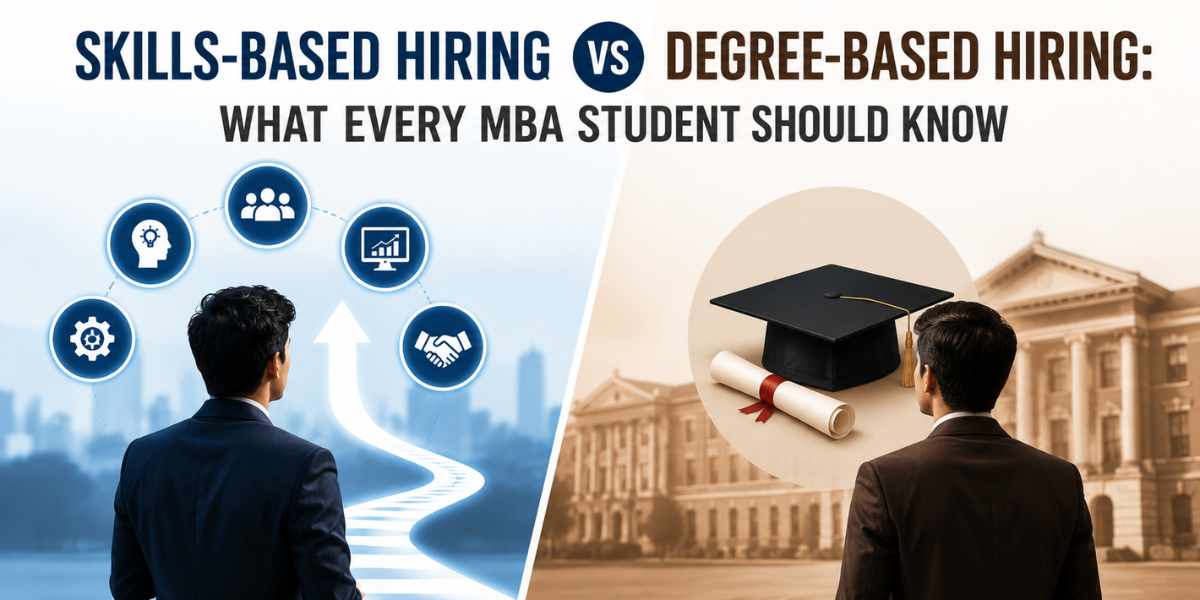
The job market is changing rapidly, and employers are rethinking how they evaluate candidates. While degrees continue to hold value, many organizations now place greater importance on practical skills, problem-solving abilities, and workplace readiness. This shift has given rise to skills-based hiring, a recruitment approach that focuses on what candidates can do rather than just what qualifications they hold. For MBA students preparing for competitive careers, understanding this trend is essential.
What Is Degree-Based Hiring?
Degree-based hiring is the traditional recruitment method where employers prioritize academic qualifications. A bachelor’s or master’s degree often serves as the first screening criterion for job applications. This approach assumes that formal education provides the knowledge and discipline required to perform well in a professional role.
Degrees remain valuable because they demonstrate commitment, theoretical understanding, and subject knowledge. However, they may not always reflect a candidate’s ability to solve real-world business problems or adapt to changing workplace demands.
Why People Analytics Matters
In today’s highly competitive business environment, organizations must attract, develop, and retain talented employees to remain successful. People Analytics offers valuable insights that support these objectives.
What Are Skills-Based Hiring?
Skills-based hiring emphasizes a candidate’s abilities, experience, and practical competencies instead of relying solely on academic credentials. Employers assess communication, leadership, analytical thinking, digital literacy, teamwork, and problem-solving skills through interviews, assessments, projects, and internships.
This approach allows organizations to identify individuals who can contribute effectively from the beginning, regardless of where they acquired their skills.
Why Are Employers Shifting Toward Skills?
Modern businesses operate in a fast-changing environment where technology, customer expectations, and market trends evolve quickly. Companies need professionals who can learn continuously, collaborate across teams, and respond to challenges with confidence.
As a result, recruiters increasingly value candidates who have demonstrated practical experience through internships, live projects, certifications, case competitions, and industry exposure. These experiences often provide stronger evidence of workplace readiness than academic scores alone.
What This Means for MBA Students
An MBA remains a strong qualification, but it should be complemented with relevant skills. Students who combine academic learning with practical application gain a competitive advantage during placements.
Key skills every MBA student should focus on include:
- Communication and presentation skills
- Leadership and team management
- Data analysis and business decision-making
- Digital marketing and business technology
- Critical thinking and problem-solving
- Time management and adaptability
- Negotiation and interpersonal skills
Developing these competencies helps students perform confidently during interviews and succeed in professional roles.
How to Build Industry-Ready Skills
Students can enhance their professional profiles by gaining hands-on experience through internships, participating in business simulations, working on live projects, attending skill-development workshops, and engaging in networking opportunities with industry professionals. Professional certifications in analytics, finance, marketing, or project management also enhance employability.
In addition, participating in group discussions, public speaking activities, and entrepreneurship initiatives helps develop leadership and communication abilities that employers highly value.
Building a portfolio of achievements, including successful projects and measurable results, can further demonstrate practical expertise during recruitment.
Finding the Right Balance
The debate is not about choosing skills over degrees or vice versa. Instead, successful professionals combine both. A respected MBA program provides a strong academic foundation, while hands-on learning develops the practical capabilities required in today’s workplace.
Students should therefore seek institutions that integrate classroom learning with internships, industry interaction, case studies, and experiential learning opportunities. This balanced approach prepares graduates to meet employer expectations and adapt to future career challenges.
Conclusion
The hiring landscape is no longer defined solely by academic qualifications. Employers are increasingly looking for professionals who can think critically, communicate effectively, solve business challenges, and adapt to changing industry needs. While an MBA degree provides a strong foundation in management concepts, it is the ability to apply that knowledge in real-world situations that truly sets candidates apart. By investing in practical learning, internships, certifications, and leadership experiences, students can significantly enhance their employability and build successful careers.
As the demand for Skills-Based Hiring continues to grow, students must focus on continuous learning and developing competencies that align with industry expectations. For MBA students in Hubli, choosing an institution that blends academic excellence with hands-on industry exposure can make a meaningful difference in career outcomes. IEMS B-SCHOOL is committed to preparing future business leaders by equipping them with the knowledge, practical skills, and confidence needed to succeed in today’s competitive job market.