


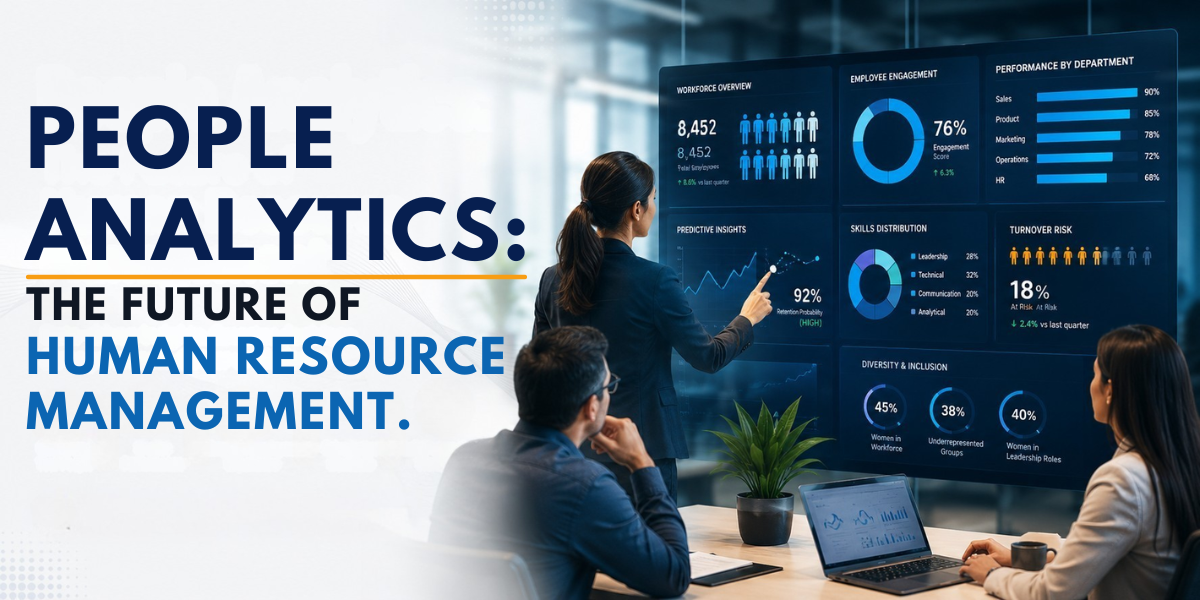
The field of Human Resources has undergone significant transformation in recent years, adapting to changing workforce dynamics and evolving business needs. Modern organizations no longer rely solely on intuition and experience to manage employees. Instead, they increasingly use data to make informed decisions. This shift has led to the emergence of People Analytics, a powerful approach that leverages employee data to improve workforce management and support organizational goals.
People Analytics is reshaping HR from a traditional administrative function into a strategic business partner. By analyzing workforce data, organizations can gain valuable insights into employee behavior, anticipate future trends, and create effective talent management strategies.
Understanding People Analytics
People Analytics, also known as HR Analytics or Workforce Analytics, involves collecting, analyzing, and interpreting employee-related data to support better human resource decisions. This data can be gathered from multiple sources, including recruitment platforms, employee surveys, attendance records, performance evaluations, and learning management systems.
The primary objective of People Analytics is to identify patterns and trends that improve workforce performance and enhance the employee experience. Rather than relying on assumptions, HR professionals can make evidence-based decisions that contribute to business success.
Why People Analytics Matters
In today’s highly competitive business environment, organizations must attract, develop, and retain talented employees to remain successful. People Analytics offers valuable insights that support these objectives.
Smarter Recruitment Decisions
Hiring the right talent is essential for organizational growth. People Analytics helps companies assess recruitment channels, evaluate hiring effectiveness, and identify the traits of high-performing employees. These insights enable organizations to refine their recruitment strategies and select candidates who are more likely to succeed.
Improved Employee Engagement
Employee engagement plays a crucial role in organizational productivity. Through surveys, feedback mechanisms, and performance data, HR teams can measure engagement levels and identify factors affecting employee satisfaction. Addressing concerns early helps improve morale and strengthen workplace culture.
Better Employee Retention
High employee turnover can increase costs and disrupt business operations. People Analytics helps organizations understand the reasons behind employee attrition by examining trends related to performance, absenteeism, compensation, and job satisfaction. Predictive insights allow companies to implement proactive retention strategies.
Data-Driven Performance Management
Traditional performance evaluations can sometimes be subjective. People Analytics introduces objectivity by using measurable performance indicators. Managers can identify top performers, recognize development areas, and design personalized growth plans for employees.
Key Applications of People Analytics
People Analytics supports several important HR functions, including:
- Workforce Planning: Forecasting future talent requirements and aligning workforce strategies with organizational objectives.
- Learning and Development: Identifying skill gaps and evaluating training effectiveness.
- Compensation Management: Ensuring fair and competitive compensation structures through data analysis.
- Diversity and Inclusion: Monitoring diversity initiatives and promoting equitable workplace practices.
- Succession Planning: Identifying and preparing future leaders for key organizational roles.
Challenges in Implementing People Analytics
Despite its benefits, organizations may encounter challenges while implementing People Analytics.
Data Quality and Integration
Accurate insights depend on reliable data. Incomplete or inconsistent information can lead to incorrect conclusions, making effective data management essential.
Privacy and Ethical Considerations
Employee information is sensitive and must be handled responsibly. Organizations should establish transparent policies regarding data collection, usage, and confidentiality to maintain employee trust.
Lack of Analytical Skills
Successful implementation requires HR professionals to possess analytical and interpretation skills. Continuous learning and upskilling are necessary to maximize the benefits of People Analytics.
Resistance to Change
Employees and managers may hesitate to adopt data-driven HR practices. Organizations should encourage awareness and provide adequate training to support smooth implementation.
The Future of People Analytics
Technologies such as artificial intelligence, machine learning, and predictive analytics are significantly influencing the future of HR. Organizations are increasingly using advanced technologies to forecast workforce trends, personalize employee experiences, and improve strategic decision-making.
As workplaces continue to evolve, People Analytics will become a vital component of modern human resource management. Organizations that effectively utilize workforce data will be better positioned to improve employee satisfaction, increase productivity, and achieve sustainable growth.
Conclusion
People Analytics is transforming the future of human resource management by enabling organizations to make informed, data-driven decisions that improve employee engagement, productivity, and retention. As businesses increasingly adopt digital technologies, the ability to analyze workforce data will become a critical skill for HR professionals seeking to drive organizational growth and create a competitive advantage.
For aspiring HR leaders, pursuing an MBA in HR can provide the essential strategic, analytical, and managerial expertise needed to thrive in this evolving landscape. Students seeking quality management education can explore IEMS B-SCHOOL, widely recognized as a Best MBA college in Hubli, to build the skills required for successful careers in modern human resource management.