

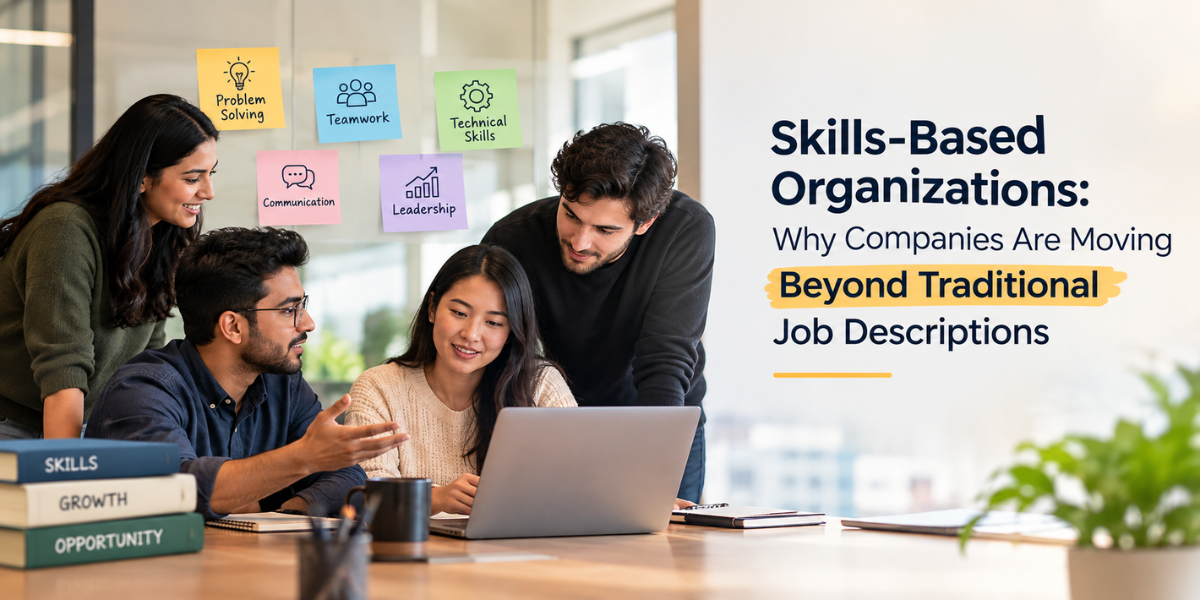
The way companies define work is changing rapidly. For decades, organizations have relied on traditional job descriptions that focus on fixed roles, qualifications, and responsibilities. However, with evolving technology, changing business needs, and increasing competition, companies are now moving toward a skills-based approach. This new model focuses on what employees can do rather than only the position they hold.
A skills-based organization identifies, develops, and utilizes the abilities of individuals to achieve business goals. Instead of limiting employees to specific job titles, companies are creating flexible work environments where people can contribute based on their skills, knowledge, and potential.
What Are a Skills-Based Organization?
A skills-based organization is a workplace model where employee skills are considered more important than traditional job roles. In this approach, companies map the skills required for different projects and match them with employees who have the right capabilities.
For example, instead of assigning a project only to employees from a particular department, a company may select people from different teams based on their expertise in areas such as data analysis, leadership, communication, technology, or problem-solving.
This approach allows businesses to use their workforce more effectively and encourages employees to continuously improve their abilities.
Why Are Companies Moving Beyond Traditional Job Descriptions?
Traditional job descriptions often define limited responsibilities and may not reflect the changing needs of modern businesses. As industries evolve, companies require employees who can adapt, learn new skills, and handle different challenges.
A skills-based model provides several advantages:
1. Better Employee Growth Opportunities
In traditional structures, employees may feel restricted by their job titles. A skills-based organization allows individuals to explore different opportunities based on their abilities and interests.
Employees can develop new skills, take part in diverse projects, and build stronger career paths. This creates a culture of continuous learning and professional growth.
2. Improved Business Flexibility
Businesses today need to respond quickly to market changes. A skills-based approach helps organizations create flexible teams that can be formed according to project requirements.
Whether it is adopting new technology, entering new markets, or solving complex problems, companies can quickly identify employees with the right skills and assign them to important tasks.
3. Focus on Skills Rather Than Degrees or Titles
Many companies are realizing that practical skills and real-world abilities are equally important as academic qualifications. A candidate’s ability to solve problems, communicate effectively, and adapt to change can often determine success in a role.
This shift allows organizations to recognize talent from diverse backgrounds and provide opportunities to individuals who demonstrate strong capabilities.
4. Encourages Continuous Learning
Technology is transforming industries at a fast pace. Skills that are valuable today may need to be upgraded tomorrow. Skills-based organizations encourage employees to keep learning and improving.
Companies are investing in training programs, workshops, and development opportunities to help employees stay prepared for future challenges.
5. Increases Employee Engagement
When employees are given opportunities that match their strengths, they are more likely to feel motivated and valued. Working on meaningful projects helps employees understand their contribution to the organization’s success.
This leads to higher job satisfaction, better performance, and stronger employee retention.
The Role of Education in Building Future-Ready Skills
The shift toward skills-based organizations also highlights the importance of modern education. Educational institutions play a major role in preparing students with industry-relevant skills.
Apart from theoretical knowledge, students need exposure to practical learning, communication skills, leadership abilities, teamwork, and problem-solving techniques. Management education programs that focus on skill development help students become more adaptable and career-ready.
Institutions that understand industry trends can prepare students to meet the expectations of modern workplaces. By developing both technical and professional skills, students gain the confidence needed to succeed in competitive environments.
How Students Can Prepare for a Skills-Based Future
Students should focus on building a strong combination of knowledge and practical abilities. Developing digital skills, improving communication, participating in internships, and gaining hands-on experience can create better career opportunities.
A growth mindset is also important. The ability to learn continuously and adapt to new situations has become one of the most valuable skills in today’s professional world.
Conclusion
The transition from traditional job descriptions to skills-based organizations represents a major change in the way companies manage talent. By focusing on skills, businesses can create flexible teams, encourage employee growth, and prepare for future challenges.
For students and professionals, developing relevant skills has become essential for long-term success. Quality education plays a significant role in building these capabilities and creating industry-ready talent. Institutions like IEMS B-SCHOOL are helping students develop practical knowledge and professional skills required for today’s evolving business environment. With a focus on Skills-based Education in Hubli, IEMS B-SCHOOL continues to support learners in building successful careers and is recognized among those seeking the Best college in Hubli for management education.